HUGE WIN FOR ILLINOIS WORKERS!!!! - Mark P. Loftus

September 26, 2025

The Illinois Supreme Court recently released an opinion – Interstate Scaffolding v. The Illinois Workers’ Compensation Commission – that provides some much needed protection to Illinois workers. Jeff Urban was an Interstate union carpenter. On July 2, 2003 he suffered a work-related injury to his head, neck and back. After he was injured, Urban underwent a significant amount of medical treatment that sometimes required him to remain off work. At other times, he was allowed to work “light duty”.
On May 25, 2005, Urban was working “light duty” at Interstate’s Hazel Crest facility. At some point that day he went to the office and advised payroll that that there was an error in his check. Additionally, he advised that a recent check had actually overpaid him. The information regarding the overpayment was relayed to the Jan Coffey, the assistant to the company president. Coffey became irate when she learned the news about the overpayment. A couple of weeks earlier Urban had drawn some religious symbols in a company storage room. Coffey felt that Urban, as a professed religious man, should not have accepted the overpayment. She confronted Urban and accused him of being a “hypocrite”. Not surprisingly, Urban was angered by the confrontation and there was a brief heated argument. The local police were called but no arrests made.
After the police left, Coffey phoned Ron Fowler, the company president and advised him of what had occurred. Fowler then contacted Urban’s supervisor and instructed him to fire Urban. Urban was fired that day. After the termination, the company refused to pay Urban temporary total disability [TTD] benefits to Urban. Under the Illinois Workers’ Compensation Act, TTD [a percentage of the worker’s average weekly wage] is to be paid until a worker’s condition has stabilized. As of May 25, 2005, Urban’s condition had not stabilized.
Urban then filed his a Workers’ Compensation case with the Illinois Industrial Commission. On June 25, 2005, the arbitrator found that Urban was not entitled to TTD after his termination. Urban appealed and the Commission modified the arbitrator’s ruling, extending TTD to June 28, 2005, the date of the hearing. Interstate appealed that decision to the Circuit Court, who confirmed the Commission decision. Interstate then took the case to the Appellate Court who ruled that Urban was not entitled to TTD. Urban then took the case to the Supreme Court.
The Supreme Court decision is brief and well-written. The Court noted that when a worker is seeking TTD, the critical inquiry is whether the condition had stablized. Urban’s condition on the date of discharge HAD NOT stabilized. Consequently the employer’s duty to pay TTD did not stop because Urban had been fired for cause. The Court established an important principle -when an employee entitled to TTD is terminated for conduct unrelated to the injury, the employer remains obligated to pay TTD until the employee’s condition is stabilized.


Red Tesla sedan driving on a road.
September 26, 2025
According to online reports, Tesla ignored a $60 million dollar settlement overture in the wrongful death case that ultimately resulted in a $242 million dollar jury verdict against the car maker. The lawsuit grew out of 2019 crash where a Tesla Model S with Autopilot engaged, plowed through a Florida intersection and crashed into a Chevy Tahoe. Neima Benavides Leon and her boyfriend, Dillon Angulo were standing near the Tahoe when the Tesla crashed into it. Leon was killed and Angulo suffered serious injuries. A lawsuit was filed against Tesla, asserting that although the Autopilot feature was engaged, the vehicle did not brake. Florida law permits a monetary demand to be issued before trial. If the defendant fails to accept the demand within 30 days it is considered rejected. If the plaintiff then goes to trial and secures a verdict 25% greater than the offer, the defendant is on the hook for plaintiff’s investigative expenses and attorneys’ fees. Tesla is appealing the jury verdict, citing “substantial errors of law and irregularities at trial.”.
Johnson's baby powder container, white bottle, blue text, red seal, 400g.
September 26, 2025
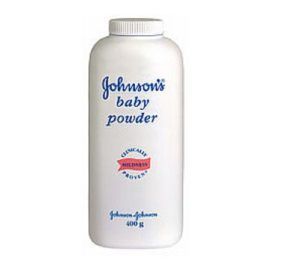
This important ruling got kind of lost in the news cycle. A couple weeks ago, the United States Supreme Court refused to vacate a $2.2 billion dollar ovarian cancer verdict against Johnson & Johnson[“J & J”]. The verdict was originally returned by a Missouri jury in 2018 on behalf of 22 women. The original verdict was actually $4.7 billion but a Missouri Appellate Court reduced the award to $2 billion. Each of the women claimed that there was asbestos and asbestos-laced talc in J & J talcum powder products they used, and they developed ovarian cancer as a result. Asbestos is known to cause cancer. Talc, in its raw form is often found in close proximity to naturally occurring asbestos. When J & J mined talc, that talc sometimes contained asbestos. And that asbestos sometimes found its way into J & J personal hygiene products. [In 2019, J & J recalled 33,000 bottles of J & J products after FDA testing found asbestos in test samples]. J & J, has known of the risk of asbestos contamination in talc products since the 1970’s. Some 21,000 plus ovarian cancer cases are pending against J & J throughout the United States.
Movie poster for
September 26, 2025
Reports today say that DuPont and the State of New Jersey have reached a $2 Billion dollar settlement arising out of DuPont’s release of “forever chemicals” into soil, wetlands and other areas in New Jersey – and then forgetting to clean up the mess they made. The settlement with DuPont is reportedly the largest environmental settlement ever obtained by a state. “Forever chemicals” – also known as PFAS(referring to per and polyfluoroalkyl substances) are man-made chemicals that are used in an extensive variety of products as they are both water and grease-resistant. The chemicals are linked to litany of health problems, including increased risk of certain cancers(kidney, testicular and breast) liver damage, thyroid issues and reproductive problems(such as decreased fertility, low birthweight and developmental problems). NJ.Com is reporting that one of the sites where DuPont created munitions created such significant contamination in the environment that over 300 homes required filters to prevent toxic chemicals from seeping into their homes. The settlement terms provide that DuPont will spend $875 millions cleaning up the contamination and set aside another $125 million to cover other damages that may arise. Additionally, DuPont will also set p a $1.2 billion funding source and reserve fund of $475 million to ensure that even if the company fails to make payments, or goes bankrupt, public funds will not be used. For a stark introduction into the nature of PFAS, check out Dark Waters, a compelling and criminally underrated movie based on the decades old fight waged by attorney Robert Bilott against DuPont for contaminating West Virginia rural communities.