The Boy Scouts and a shocking lack of due diligence. - Mark P. Loftus

September 26, 2025

A victim of sexual abuse recently filed suit against the Boy Scouts of America for failing to protect him from a known child molester. The victim, who is not named, was molested from 1985 through 1987 while a member of the Boy Scouts. The perpetrator, Thomas Hacker was a Scout Master and had met the victim through Boy Scout activities.

Hacker is currently serving a 100 year prison term for molesting another Boy Scout during roughly the same period. Hacker and the Boy Scouts have been sued on two previous occasions for similar allegations. Just over two months ago the Boy Scouts were compelled to release files they had maintained for decades on suspected pedophiles in the organization.

How Hacker actually got cleared to participate in Scout activity is a mystery. He had a lengthy criminal record involving abuse of children. In 1970 he was arrested for sexual assault of young boys while teaching in Indiana. In 1971 he pled guilty to taking indecent liberties with a boy in Mount Prospect, Illinois. He then dropped off the radar for a bit, but resurfaced again in 1982 at Most Holy Redeemer Catholic School located in Evergreen Park, Illinois. That same year he quit his teaching position after officials at Most Holy Redeemer discovered he was encouraging students to stay after class and drop their pants. Shockingly, in 1988 Hacker showed up at another Catholic School in the southwest suburbs – as the leader of the affiliated Boy Scout Troop. Amazingly, he was also working as the Youth Director for the Burbank Park District at the same time.

Hacker’s continuing ability to get jobs providing access to young kids certainly raises questions about what due diligence, IF ANY, the Catholic Schools[and the Archdiocese] as well as the Boy Scouts used prior to hiring a serial pedophile.

The victim is respresented by attorney Chris Hurley.

By Mark Loftus February 17, 2026
German Conglomerate makes a bid to end Roundup litigation 
By Mark Loftus February 17, 2026
By Mark Loftus February 3, 2026
THE ILLINOIS GENDER VIOLENCE ACT - IN A NUTSHELL Under the Illinois Gender Violence Act (GVA) 740 IlCS 82/1, victims of sexual assault, domestic violence and other forms of gender related violence can bring civil actions against perpetrators even when criminal charges are not filed. The GVA defines two of the four acts of “gender violence” - though the definitions are a bit convoluted: One or or more acts of violence of physical aggression satisfying the elements of battery under the laws of Illinois that are committed, at least in part, on the basis of a person’s sex; A physical intrusion or physical invasion of a sexual nature under coercive conditions satisfying the elements of battery under the laws of Illinois, whether or nor the act or acts resulted in criminal charges, prosecution or conviction. Under the Illinois Criminal Code, a person commits a battery when he or she knowingly, without legal justification, causes bodily harm or makes insulting/provoking physical contact with another individual. 720 ILCS 5/12-3. The Criminal Code requires physical contact. AND EMPLOYERS MAY NOW FACE LIABILITY In July, 2023 an amendment made it explicit that the GVA does extend to the workplace. As set forth in the Act, an employer is liable for gender-related violence in the workplace by an employee when the interaction arises out of and in the course of employment. Liability will only arise however, if the (1) the employee was directly performing his or her duties and the violence was the proximate cause of the injury or (2) while the agent of the employer was directly involved in the gender-related violence and the performance of the work was the proximate cause of the injury. Liability will only extend to the the employer however if it can be shown that (1) the employer failed to supervise, train or monitor the offending employee or 2) the employer failed to investigate and respond to reports directly provided to appropriate management personnel. Damages under the Act may include injunctive relief, and actual damages, damages for emotional distress and punitive damages. And importantly, the GVA is a fee-shifting statute - so a successful plaintiff may seek to recover attorneys fees. So, in cases of sexual harassment, may a plaintiff, include a count for damages under the GVA? The answer is an unqualified yes. And the contact need not be excessive or dramatic or prolonged - so long as there was no consent nor any justification for the physical contact. In fact, the Act notes that a legitimate threat that the harasser will commit an nonconsensual act is sufficient.
Red Tesla sedan driving on a road.
September 26, 2025
According to online reports, Tesla ignored a $60 million dollar settlement overture in the wrongful death case that ultimately resulted in a $242 million dollar jury verdict against the car maker. The lawsuit grew out of 2019 crash where a Tesla Model S with Autopilot engaged, plowed through a Florida intersection and crashed into a Chevy Tahoe. Neima Benavides Leon and her boyfriend, Dillon Angulo were standing near the Tahoe when the Tesla crashed into it. Leon was killed and Angulo suffered serious injuries. A lawsuit was filed against Tesla, asserting that although the Autopilot feature was engaged, the vehicle did not brake. Florida law permits a monetary demand to be issued before trial. If the defendant fails to accept the demand within 30 days it is considered rejected. If the plaintiff then goes to trial and secures a verdict 25% greater than the offer, the defendant is on the hook for plaintiff’s investigative expenses and attorneys’ fees. Tesla is appealing the jury verdict, citing “substantial errors of law and irregularities at trial.”.
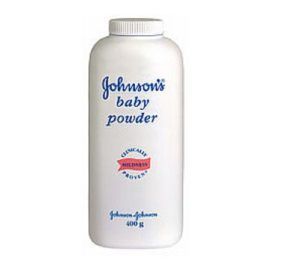
Johnson's baby powder container, white bottle, blue text, red seal, 400g.
September 26, 2025
This important ruling got kind of lost in the news cycle. A couple weeks ago, the United States Supreme Court refused to vacate a $2.2 billion dollar ovarian cancer verdict against Johnson & Johnson[“J & J”]. The verdict was originally returned by a Missouri jury in 2018 on behalf of 22 women. The original verdict was actually $4.7 billion but a Missouri Appellate Court reduced the award to $2 billion. Each of the women claimed that there was asbestos and asbestos-laced talc in J & J talcum powder products they used, and they developed ovarian cancer as a result. Asbestos is known to cause cancer. Talc, in its raw form is often found in close proximity to naturally occurring asbestos. When J & J mined talc, that talc sometimes contained asbestos. And that asbestos sometimes found its way into J & J personal hygiene products. [In 2019, J & J recalled 33,000 bottles of J & J products after FDA testing found asbestos in test samples]. J & J, has known of the risk of asbestos contamination in talc products since the 1970’s. Some 21,000 plus ovarian cancer cases are pending against J & J throughout the United States.