Multiple Deaths at University of Pittsburgh Medical Center possibly related to mold growth or ventilation. - Mark P. Loftus

September 26, 2025

As reported at CNN.Com, there are some strange and tragic things going on at the University of Pittsburgh Medical Center [“UPMC”]. Since October, 2014, there have been five deaths that were initially attributed to heavy mold growth on linens at UPMC hospitals. The problems seems particularly prevalent in the transplant unit – where five transplant recipients died due to mold infections. UPMC commissioned a report on the mold issue in September, 2015 after the first three deaths. The resulting investigation tested areas at the hospital and at Paris Healthcare Linen[“Paris” ] – the company that provides linens to the hospital. The test results showed mold at the hospital and in nearly every single location tested at the Paris facility. The examiners found heavy fungal growth of Mucor and rhizopus on linens delivered to one of the Medical Center facilities. At the Paris facility, a heavy buildup of mold was discovered near a vent that provided air to dry linens destined for UPMC facilities. Healthcare linen providers are obligated to comply with certain standards set forth by the Healthcare Laundry Accreditation Council. The examiner who conducted the investigation did not feel Paris was meeting those standards. Despite the report, April Hutcheson of the Pennsylvania Department of Health commented that “The facts of this investigation don’t support the conclusion that the infections resulted from exposure to linens.”

In September of 2015, UPMC requested The Centers for Disease Control [“CDC”] to investigate the deaths. The CDC felt the deaths were NOT related to the linens but to ventilation issues that allowed dust and mold to enter patient rooms.

Rhizopus and Mucor mold are quite common and typically do not bother most healthy people. But they can present significant problems for immune-suppressed patients, including transplant patients or patients receiving chemotherapy.

Two of the transplant patients who died had rhizopus positive infections that required multiple sections of their lungs removed prior to their death. Despite the investigations, UPMC continues to utilize Paris to provide linens. Paris CEO Dave Stern noted the “Paris Companies consistently meets or exceeds accreditation standards and regulatory guidelines for laundering linens, which demonstrates our ongoing commitment to quality and safety. We continue to cooperate with all regulatory agencies involved in the oversight of linen processing.”.


Red Tesla sedan driving on a road.
September 26, 2025
According to online reports, Tesla ignored a $60 million dollar settlement overture in the wrongful death case that ultimately resulted in a $242 million dollar jury verdict against the car maker. The lawsuit grew out of 2019 crash where a Tesla Model S with Autopilot engaged, plowed through a Florida intersection and crashed into a Chevy Tahoe. Neima Benavides Leon and her boyfriend, Dillon Angulo were standing near the Tahoe when the Tesla crashed into it. Leon was killed and Angulo suffered serious injuries. A lawsuit was filed against Tesla, asserting that although the Autopilot feature was engaged, the vehicle did not brake. Florida law permits a monetary demand to be issued before trial. If the defendant fails to accept the demand within 30 days it is considered rejected. If the plaintiff then goes to trial and secures a verdict 25% greater than the offer, the defendant is on the hook for plaintiff’s investigative expenses and attorneys’ fees. Tesla is appealing the jury verdict, citing “substantial errors of law and irregularities at trial.”.
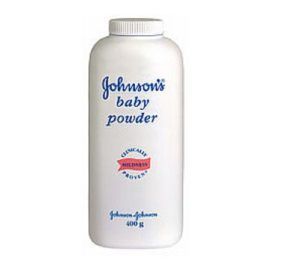
Johnson's baby powder container, white bottle, blue text, red seal, 400g.
September 26, 2025
This important ruling got kind of lost in the news cycle. A couple weeks ago, the United States Supreme Court refused to vacate a $2.2 billion dollar ovarian cancer verdict against Johnson & Johnson[“J & J”]. The verdict was originally returned by a Missouri jury in 2018 on behalf of 22 women. The original verdict was actually $4.7 billion but a Missouri Appellate Court reduced the award to $2 billion. Each of the women claimed that there was asbestos and asbestos-laced talc in J & J talcum powder products they used, and they developed ovarian cancer as a result. Asbestos is known to cause cancer. Talc, in its raw form is often found in close proximity to naturally occurring asbestos. When J & J mined talc, that talc sometimes contained asbestos. And that asbestos sometimes found its way into J & J personal hygiene products. [In 2019, J & J recalled 33,000 bottles of J & J products after FDA testing found asbestos in test samples]. J & J, has known of the risk of asbestos contamination in talc products since the 1970’s. Some 21,000 plus ovarian cancer cases are pending against J & J throughout the United States.
Movie poster for
September 26, 2025
Reports today say that DuPont and the State of New Jersey have reached a $2 Billion dollar settlement arising out of DuPont’s release of “forever chemicals” into soil, wetlands and other areas in New Jersey – and then forgetting to clean up the mess they made. The settlement with DuPont is reportedly the largest environmental settlement ever obtained by a state. “Forever chemicals” – also known as PFAS(referring to per and polyfluoroalkyl substances) are man-made chemicals that are used in an extensive variety of products as they are both water and grease-resistant. The chemicals are linked to litany of health problems, including increased risk of certain cancers(kidney, testicular and breast) liver damage, thyroid issues and reproductive problems(such as decreased fertility, low birthweight and developmental problems). NJ.Com is reporting that one of the sites where DuPont created munitions created such significant contamination in the environment that over 300 homes required filters to prevent toxic chemicals from seeping into their homes. The settlement terms provide that DuPont will spend $875 millions cleaning up the contamination and set aside another $125 million to cover other damages that may arise. Additionally, DuPont will also set p a $1.2 billion funding source and reserve fund of $475 million to ensure that even if the company fails to make payments, or goes bankrupt, public funds will not be used. For a stark introduction into the nature of PFAS, check out Dark Waters, a compelling and criminally underrated movie based on the decades old fight waged by attorney Robert Bilott against DuPont for contaminating West Virginia rural communities.