Can we put a fork in the de mimimus rule? - Mark P. Loftus
The “ de minimus rule” is a great example of a how a limited legal concept gets misused and misapplied. In effect, the de minimus rule is a defense argument that is used in premises liability cases. Reduced to its simplest form, the de minimus rule says that whatever the defect was, it was too small to matter and the injured party can’t recover.
The First District Appellate Court in Barrett v. FA Group did a nice job in taking some of the air out of this overused and misunderstood concept. Let’s hope this is the first step in doing away with a clumsy rule that has become unmanageable.
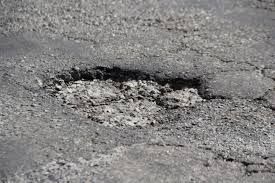
In Barrett, the plaintiff, Rhonda Barrett was injured when she stepped into a parking lot pothole and fell. She sued the owners, alleging that they did not properly maintain the lot and failed to warn pedestrians of a dangerous condition. The defendants moved to toss the case. In their motion they argued that the de minimus rule says that any defect under two inches is not actionable – in other words the plaintiff cannot recover. And, they argued that in Barrett’s case, the depression that had caused her fall was only a half inch. So according to the de minimus rule, they get to skate. The trial court agreed and tossed the case and the plaintiff appealed.
The Appellate Court opinion includes a thoughtful analysis of both the de minimus rule and the evidence in Barrett’s case. First, the opinion points out that the de mimimus rule originated in personal injury lawsuits where claimants were suing municipalities . It was recognized that it simply isn’t realistic to require cities and towns to keep every square inch of sidewalk in perfect condition. Over the years Appellate Court opinions expanded the breadth of the rule and began to use it when private property was involved. The Appellate Court noted that the Illinois Supreme Court has specifically opined that there is no global mathematical formulation and the facts of each case have to be considered. Despite that specific admonition, some Appellate Courts inexplicably decided that in de mimimus cases, two inches was the magic number. So cases started getting tossed if the defect was under two inches.
The court then took a hard look at the evidence in Barrett’s case. Again, the defendants argued the height differential was only a half inch. But the Appellate Court properly noted the difference in height at the location allowed for Barrett’s two inch high heel to get stuck between the different levels. Additionally, the Appellate Court had some doubts about how the defendants concluded the height difference was minimal. And that suspicion was well-founded. The defendants had submitted an affidavit from an owner of the property, Mohammed Nofal. Nofal said in his affidavit that the height difference was only a half inch. But he didn’t explain how he got to that specific measurement. And his affidavit was drafted three years after Barrett fell. And the lot had been repaved after Barrett fell. The Appellate Court was properly skeptical about Nofal’s measurement. Despite its skepticism, the Appellate Court concluded that the depth of the pothole was between a half inch and two inches – which would still be covered by the de minimus rule.
But then the Appellate Court looked at the facts. And the Court noted that Barrett wasn’t alleging that the height change between the depth of the pothole and surrounding lot caused her fall. Instead, she was alleging that broken asphalt and/or pavement inside the pothole grabbed her heel and caused her fall. Additionally, Barrett fell at night, in an area with poor lighting. And the area where she fell featured a large pothole which contained broken up pieces of asphalt.
Lastly, the court summarily disposed of the always popular “She should have walked around it” argument, by noting that its job wasn’t to determine what plaintiff should have done.
The Appellate Court concluded that the defect in the parking lot was not de minimus. The trial court decision was reversed. Congrats to lawyers who represented Ms. Barrett.