Motorola alleged to have withheld information pertaining to potential birth defects from workers. - Mark P. Loftus

September 26, 2025

I receive regular emails from certain bar associations with links to recent appellate court decisions. I clicked on a link to the Ledeaux v. Motorola Inc. decision, which referred to a lawsuit filed by multiple Motorola workers on behalf of their children. The workers are alleging they were exposed to toxic products while at Motorola and their children suffered birth defects as a result. By way of background, the case arrived in the Appellate Court after a trial judge had dismissed the case after deciding plaintiffs simply couldn’t prove their cases.

The Appellate Court decision is lengthy and delves into nuanced discussions involving choice of law; the impact of the exclusivity doctrine found in most Workers’ Compensation statutes and a detailed discussion regarding proximate cause. While interesting from a legal perspective, those discussions bury the lead.

The jaw-dropping take away from the decision involves the appalling disregard Motorola allegedly displayed toward the health of its workers. At multiple manufacturing plants in Arizona and Texas, Motorola had “clean rooms” where semiconductor wafers, microchips and other internal computer components were made. The “clean rooms” were controlled environments designed to prevent contaminants from contacting semiconductor components during the manufacturing process. Certain chemicals used by workers in the “clean rooms” were toxic – and from the allegations made, it appears that Motorola knew they were toxic and didn’t advise their workers. One of the complaints alleges Motorola had studies linking the chemicals to birth defects. Additionally, it is alleged industry associations had circulated warnings to Motorola regarding the use of the chemicals. Finally, it is alleged in one of the complaints that Motorola actually tracked the incidence of birth defects in employee children. Based on these facts, and some other facts the plaintiffs had set forth, the Appellate Court found that the plaintiffs had indeed alleged sufficient facts to demonstrate Motorola had a duty to provide employees with a safe environment AND to warn employees of the risk of birth defects .

Additionally, the Appellate Court was called upon to determine if the plaintiffs could go forward with claims for wilful and wanton misconduct against Motorola. The Appellate Court noted that plainiffs had alleged: 1) Motorola had altered the collection/measurement of chemical levels in the room to show lower exposures; and 2) had failed to comply with standards and regulations to protect the workers and their offsping. Based on those allegations, the Court decided that the plaintiffs had sufficiently set forth facts establishing wilful and wanton negligence. The case will go foward. Hats off to the lawyers representing the workers for appealing the trial judge and getting the case back on track.

These cases are a long way from conclusion but this opinion likely generated significant distress at Motorola HQ


Red Tesla sedan driving on a road.
September 26, 2025
According to online reports, Tesla ignored a $60 million dollar settlement overture in the wrongful death case that ultimately resulted in a $242 million dollar jury verdict against the car maker. The lawsuit grew out of 2019 crash where a Tesla Model S with Autopilot engaged, plowed through a Florida intersection and crashed into a Chevy Tahoe. Neima Benavides Leon and her boyfriend, Dillon Angulo were standing near the Tahoe when the Tesla crashed into it. Leon was killed and Angulo suffered serious injuries. A lawsuit was filed against Tesla, asserting that although the Autopilot feature was engaged, the vehicle did not brake. Florida law permits a monetary demand to be issued before trial. If the defendant fails to accept the demand within 30 days it is considered rejected. If the plaintiff then goes to trial and secures a verdict 25% greater than the offer, the defendant is on the hook for plaintiff’s investigative expenses and attorneys’ fees. Tesla is appealing the jury verdict, citing “substantial errors of law and irregularities at trial.”.
Johnson's baby powder container, white bottle, blue text, red seal, 400g.
September 26, 2025
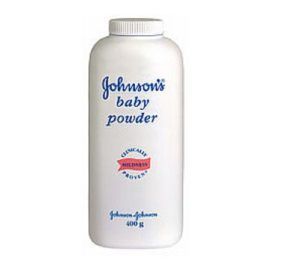
This important ruling got kind of lost in the news cycle. A couple weeks ago, the United States Supreme Court refused to vacate a $2.2 billion dollar ovarian cancer verdict against Johnson & Johnson[“J & J”]. The verdict was originally returned by a Missouri jury in 2018 on behalf of 22 women. The original verdict was actually $4.7 billion but a Missouri Appellate Court reduced the award to $2 billion. Each of the women claimed that there was asbestos and asbestos-laced talc in J & J talcum powder products they used, and they developed ovarian cancer as a result. Asbestos is known to cause cancer. Talc, in its raw form is often found in close proximity to naturally occurring asbestos. When J & J mined talc, that talc sometimes contained asbestos. And that asbestos sometimes found its way into J & J personal hygiene products. [In 2019, J & J recalled 33,000 bottles of J & J products after FDA testing found asbestos in test samples]. J & J, has known of the risk of asbestos contamination in talc products since the 1970’s. Some 21,000 plus ovarian cancer cases are pending against J & J throughout the United States.
Movie poster for
September 26, 2025
Reports today say that DuPont and the State of New Jersey have reached a $2 Billion dollar settlement arising out of DuPont’s release of “forever chemicals” into soil, wetlands and other areas in New Jersey – and then forgetting to clean up the mess they made. The settlement with DuPont is reportedly the largest environmental settlement ever obtained by a state. “Forever chemicals” – also known as PFAS(referring to per and polyfluoroalkyl substances) are man-made chemicals that are used in an extensive variety of products as they are both water and grease-resistant. The chemicals are linked to litany of health problems, including increased risk of certain cancers(kidney, testicular and breast) liver damage, thyroid issues and reproductive problems(such as decreased fertility, low birthweight and developmental problems). NJ.Com is reporting that one of the sites where DuPont created munitions created such significant contamination in the environment that over 300 homes required filters to prevent toxic chemicals from seeping into their homes. The settlement terms provide that DuPont will spend $875 millions cleaning up the contamination and set aside another $125 million to cover other damages that may arise. Additionally, DuPont will also set p a $1.2 billion funding source and reserve fund of $475 million to ensure that even if the company fails to make payments, or goes bankrupt, public funds will not be used. For a stark introduction into the nature of PFAS, check out Dark Waters, a compelling and criminally underrated movie based on the decades old fight waged by attorney Robert Bilott against DuPont for contaminating West Virginia rural communities.