Surprise Headline - Federal Appeals Court sides with injured plaintiff in Costco Spilled Smoothie case. - Mark P. Loftus
In a rather surprising development, the 7th Circuit Court of Appeals recently handed down a decision resurrecting a plaintiff’s negligence case against Costco. I know, from painful personal experience, that federal court judges are not particularly excited to see personal injury cases on their dockets. So any helpful injury cases out of a federal court merits some discussion.
In Cruz v. Costco the plaintiff, Reyna Cruz fell while shopping in a Costco Food Court. She filed a lawsuit against Costco alleging that it had failed to clean up a Smoothie that had been spilled on the floor. Costco moved to toss the case arguing that it did not have constructive notice of the spill, so a jury could not find it negligent. The trial judge agreed and booted the case. Ms. Cruz appealed.
The facts showed that Ms. Cruz fell at roughly 1:13 pm. Costco had the Food Court under video surveillance and there was video of the area in question from 12:45 pm(roughly 30 minutes before the incident) until 1:45 pm. For nearly 30 minutes prior to the plaintiff’s fall, the video showed customers in the area. The video did not show a smoothie spill or a customer purchasing a Smoothie.
At 1:09 pm the video showed a woman in the Food Court. The woman was pushing a shopping cart with her daughter in the cart. At 1:10 the woman bent over to pick up a red item that either she or her daughter dropped. It was unclear what the item was.
At 1:13, Cruz fell. A Costco manager immediately responded but did not recall seeing anything on the floor. Two other Costco employees were seen on the video wiping around the area where Cruz fell, one with a mop and the other using a cloth or rag. After the area was cleaned a “Wet Floor” sign was set up.
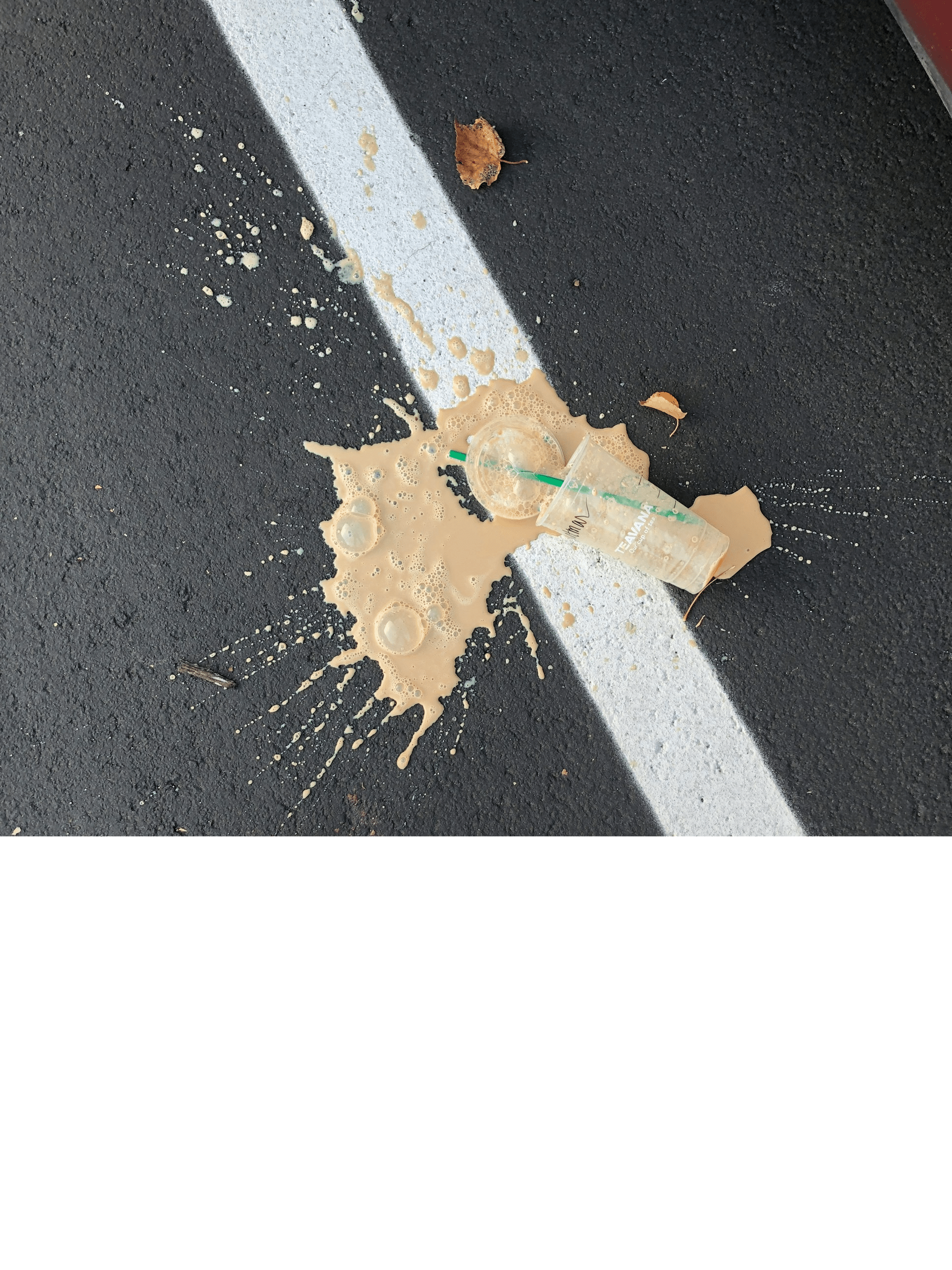
The Costco Manager created an Incident Report where he wrote the Cruz fell on a Smoothie that was dropped by a customer. He also noted there was a substance or liquid on the floor. Specifically he noted there were 5 drops of Smoothie on the floor.
Costco’s motion to have the case tossed argued that there was no evidence that would allow a jury to conclude that the Smoothie had been on the floor long enough to establish constructive notice – i.e. that Costco should have known. The trial court agreed and tossed the case. Ms. Cruz then appealed.
In the Appellate Opinion, the 7th Circuit noted the business owners can be liable for injuries from foreign substances on flooring – if the customer can establish the business owner had constructive notice – by proving that the condition existed for a sufficiently long time so that a reasonably careful business owner should have discovered it.
In examining the evidence the 7th Circuit went on to note the a jury could indeed have found that the Smoothie was on the floor long enough for Costco to have constructive notice. The Appellate Court first pointed to the Incident Report which acknowledged Smoothie droplets on the floor. Additionally, the video showed customers and employees pointing to an area on the floor – evidence of a spill. And Costco employees wiped the area up. The Court concluded there was sufficient evidence to create a jury question as to whether Cruz fell on Smoothie droplets.
The next issue was how long a jury could conclude the droplets were on the floor. The Appellate Court noted that the video demonstrated that for at least 28 minutes prior to her fall there had been no clean up of the droplets. Consequently, a reasonable jury could conclude that the droplets had been present for longer than 28 minutes. The Appellate Court noted that Cruz had indeed presented evidence 1) that there was Smoothie droplets on the floor and 2) those droplets were present for at least 28 minutes. The Opinion noted that a reasonable jury could indeed have found that Costco should have discovered the spill if it was there for 28 minute, and importantly, that Costco had constructive notice.
The 7th Circuit reversed the trial court’s ruling and held that Cruz could go to trial on her negligence claim.