ADDISON POLICE NOT LIABLE FOR ARREST BASED ON STOLEN IDENTITY - Mark P. Loftus

September 26, 2025

Plaintiff Hilario Mercado Jr. went to a family birthday party on September 27, 2003. As so often happens at family parties, a fight broke out and the Addison Police were called. Upon their arrival, Mercado and another person were leaving. One of the officers requested ID and Mercado presented his state ID. The Police ran Mercado’s name, race, sex and date of birth and learned that a “no bond” warrant had been issued for Mercado on a retail theft charge. The DuPage Sheriff was contacted and it was confirmed the warrant was still valid. The DuPage warrant provided information as to the Mercado’s name, date of birth, driver’s license, social security number, eye color, hair color, height and weight. The officers explained the warrant and arrested Mercado. Mercado claimed that he insisted that he was not the subject of the warrant, had never been arrested and had never missed court. [Later it was learned that Mercado’s identity had been stolen and the person who failed to appear was not Mercado, but someone named Ruben Vasquez]. The Police denied that Mercado claimed he wasn’t the subject of any warrant. Mercado was taken to jail. A couple of days later he appeared in court but didn’t mention any mistaken identity. He did request a court-appointed attorney. Later that day Mercado contacted his own attorney who attended a subsequent hearing on the case. At that time a fingerprint analysis was ordered and it was finally revealed that Mercado was not the person who had committed the retail theft. Mercado was later released. Some time later he sued the Village of Addison for false arrest. The defendant moved for summary judgment, arguing that it had probable cause to arrest Mercado. The trial court granted the motion and Mercado appealed.
Plaintiff argued on appeal that the motion for summary judgment should not have been granted, as there were factual questions whether the officers had a duty to investigate his claims of mistaken identity. The defense, in response, asserted that the officers acted in good faith, as the warrant named Mercado and the identifying information on the warrant was correct. In addition, the Village argued that at the time of the arrest[2:30 am]there was no way to investigate the claims of mistaken identity.
The Second District Appellate Court first noted that to succeed on the false arrest claim, the plantiff had to show that he was arrested without any reasonable grounds to believe an offense had been commmittted. [And the Court also noted that because Village had immunity under the Local Governmental and Governmental Employees Tort Immunity Act for any acts or omissions in the enforcement of a law, the plaintiff was obligated to show the officers conduct was wilful and wanton].
The Appellate Court felt that the key issue was whether the the officers reasonably believed Mercado was the fellow named in the warrant. The trial court felt they had – and the Appellate Court agreed. The Court noted that all the info on the warrant[name; DOB; address; Driver’s License number; Social Security number; eye color; hair color; height and weight] all matched plaintiff’s information. In short, the officers had every reason to believe that they had the right guy. Because Mercado was the individual named in the warrant, the Appellate Court ruled the the officers did not act unreasonably in arresting him. The trial court’s ruling was affirmed.


Red Tesla sedan driving on a road.
September 26, 2025
According to online reports, Tesla ignored a $60 million dollar settlement overture in the wrongful death case that ultimately resulted in a $242 million dollar jury verdict against the car maker. The lawsuit grew out of 2019 crash where a Tesla Model S with Autopilot engaged, plowed through a Florida intersection and crashed into a Chevy Tahoe. Neima Benavides Leon and her boyfriend, Dillon Angulo were standing near the Tahoe when the Tesla crashed into it. Leon was killed and Angulo suffered serious injuries. A lawsuit was filed against Tesla, asserting that although the Autopilot feature was engaged, the vehicle did not brake. Florida law permits a monetary demand to be issued before trial. If the defendant fails to accept the demand within 30 days it is considered rejected. If the plaintiff then goes to trial and secures a verdict 25% greater than the offer, the defendant is on the hook for plaintiff’s investigative expenses and attorneys’ fees. Tesla is appealing the jury verdict, citing “substantial errors of law and irregularities at trial.”.
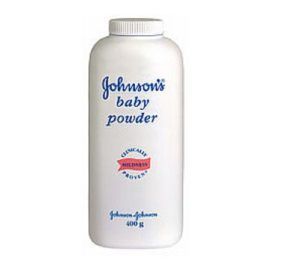
Johnson's baby powder container, white bottle, blue text, red seal, 400g.
September 26, 2025
This important ruling got kind of lost in the news cycle. A couple weeks ago, the United States Supreme Court refused to vacate a $2.2 billion dollar ovarian cancer verdict against Johnson & Johnson[“J & J”]. The verdict was originally returned by a Missouri jury in 2018 on behalf of 22 women. The original verdict was actually $4.7 billion but a Missouri Appellate Court reduced the award to $2 billion. Each of the women claimed that there was asbestos and asbestos-laced talc in J & J talcum powder products they used, and they developed ovarian cancer as a result. Asbestos is known to cause cancer. Talc, in its raw form is often found in close proximity to naturally occurring asbestos. When J & J mined talc, that talc sometimes contained asbestos. And that asbestos sometimes found its way into J & J personal hygiene products. [In 2019, J & J recalled 33,000 bottles of J & J products after FDA testing found asbestos in test samples]. J & J, has known of the risk of asbestos contamination in talc products since the 1970’s. Some 21,000 plus ovarian cancer cases are pending against J & J throughout the United States.
Movie poster for
September 26, 2025
Reports today say that DuPont and the State of New Jersey have reached a $2 Billion dollar settlement arising out of DuPont’s release of “forever chemicals” into soil, wetlands and other areas in New Jersey – and then forgetting to clean up the mess they made. The settlement with DuPont is reportedly the largest environmental settlement ever obtained by a state. “Forever chemicals” – also known as PFAS(referring to per and polyfluoroalkyl substances) are man-made chemicals that are used in an extensive variety of products as they are both water and grease-resistant. The chemicals are linked to litany of health problems, including increased risk of certain cancers(kidney, testicular and breast) liver damage, thyroid issues and reproductive problems(such as decreased fertility, low birthweight and developmental problems). NJ.Com is reporting that one of the sites where DuPont created munitions created such significant contamination in the environment that over 300 homes required filters to prevent toxic chemicals from seeping into their homes. The settlement terms provide that DuPont will spend $875 millions cleaning up the contamination and set aside another $125 million to cover other damages that may arise. Additionally, DuPont will also set p a $1.2 billion funding source and reserve fund of $475 million to ensure that even if the company fails to make payments, or goes bankrupt, public funds will not be used. For a stark introduction into the nature of PFAS, check out Dark Waters, a compelling and criminally underrated movie based on the decades old fight waged by attorney Robert Bilott against DuPont for contaminating West Virginia rural communities.