SECTION 324: AN EXCEPTION TO THE ILLINOIS RULE THAT ONE CANNOT BE HELD LIABLE FOR FAILING TO PROTECT ANOTHER FROM CRIMINAL ATTACK - Mark P. Loftus

September 26, 2025

I am presently fighting a Motion to Dismiss in a horrible case that arose in a hospital. My client was was in the hospital for cardiac symptoms. After sedating my client with Morphine and rendering her unable to defend herself, a male nurse allegedly sexually asaulted her. [ I hate to qualify with “allegedly” but I was at a conference last night where a bigshot with the Illinois Attorney Registration and Disciplinary Commission told us to be careful with blog entries.] So better safe than sorry.
Back to the point. The Hospital has already succeeded in getting my first complaint dismissed, arguing that it is not liable for the criminal acts of an employee. Additionally, they argued, as defendants in these cases always do, that there were not on notice the nurse posed a danger. I filed a slightly modified Amended Complaint and of course they basically filed the exact same motion to dismiss, which will be argued shortly.
In doing some research, I stumbled across an interesting case that gave me a glimmer of hope. In Platson v. NSM America, a high school student took an internship position with a company and some scumbag allegedly sexually assaulted her. She sued the company, and of course the company moved to dismiss, arguing it wasn’t responsible for the plaintiff’s safety.
The Motion was granted and the plaintiff appealed. The Appellate Court said, Not So Fast, and ruled that the plaintiff did state a cause of action. Of particular interest to me was that portion of the opinion where the Court found a cause of action under Section 324 of the Restatement. Section 324 provides: “One who undertakes, gratuitously or for consideration, to render services to another which he should recognize as necessary for the protection of a third person or his things, is subject to liability to the third person for physical harm resulting from his failure to exercise reasonable care to protect his undertaking if …(b) he has undertaken a duty owed by the other to the third person” What does that mean in English? I’m not entirely sure, but I think it basically means: If Party A normally cares for an John Doe and, for whatever reason, Party B then assumes caring for John Doe,[knowing A usually does so] then Party B is liable if John Doe gets hurt…even if due to the criminal acts of a third party. Additionally, Party B doesn’t have to be on notice that John Doe might be in danger. Great language – now I have to figure out how I can use 324 to beat this motion. To be continued…


Red Tesla sedan driving on a road.
September 26, 2025
According to online reports, Tesla ignored a $60 million dollar settlement overture in the wrongful death case that ultimately resulted in a $242 million dollar jury verdict against the car maker. The lawsuit grew out of 2019 crash where a Tesla Model S with Autopilot engaged, plowed through a Florida intersection and crashed into a Chevy Tahoe. Neima Benavides Leon and her boyfriend, Dillon Angulo were standing near the Tahoe when the Tesla crashed into it. Leon was killed and Angulo suffered serious injuries. A lawsuit was filed against Tesla, asserting that although the Autopilot feature was engaged, the vehicle did not brake. Florida law permits a monetary demand to be issued before trial. If the defendant fails to accept the demand within 30 days it is considered rejected. If the plaintiff then goes to trial and secures a verdict 25% greater than the offer, the defendant is on the hook for plaintiff’s investigative expenses and attorneys’ fees. Tesla is appealing the jury verdict, citing “substantial errors of law and irregularities at trial.”.
Johnson's baby powder container, white bottle, blue text, red seal, 400g.
September 26, 2025
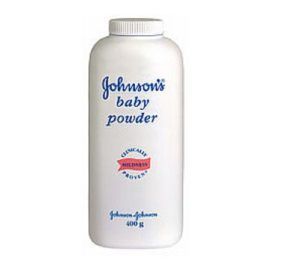
This important ruling got kind of lost in the news cycle. A couple weeks ago, the United States Supreme Court refused to vacate a $2.2 billion dollar ovarian cancer verdict against Johnson & Johnson[“J & J”]. The verdict was originally returned by a Missouri jury in 2018 on behalf of 22 women. The original verdict was actually $4.7 billion but a Missouri Appellate Court reduced the award to $2 billion. Each of the women claimed that there was asbestos and asbestos-laced talc in J & J talcum powder products they used, and they developed ovarian cancer as a result. Asbestos is known to cause cancer. Talc, in its raw form is often found in close proximity to naturally occurring asbestos. When J & J mined talc, that talc sometimes contained asbestos. And that asbestos sometimes found its way into J & J personal hygiene products. [In 2019, J & J recalled 33,000 bottles of J & J products after FDA testing found asbestos in test samples]. J & J, has known of the risk of asbestos contamination in talc products since the 1970’s. Some 21,000 plus ovarian cancer cases are pending against J & J throughout the United States.
Movie poster for
September 26, 2025
Reports today say that DuPont and the State of New Jersey have reached a $2 Billion dollar settlement arising out of DuPont’s release of “forever chemicals” into soil, wetlands and other areas in New Jersey – and then forgetting to clean up the mess they made. The settlement with DuPont is reportedly the largest environmental settlement ever obtained by a state. “Forever chemicals” – also known as PFAS(referring to per and polyfluoroalkyl substances) are man-made chemicals that are used in an extensive variety of products as they are both water and grease-resistant. The chemicals are linked to litany of health problems, including increased risk of certain cancers(kidney, testicular and breast) liver damage, thyroid issues and reproductive problems(such as decreased fertility, low birthweight and developmental problems). NJ.Com is reporting that one of the sites where DuPont created munitions created such significant contamination in the environment that over 300 homes required filters to prevent toxic chemicals from seeping into their homes. The settlement terms provide that DuPont will spend $875 millions cleaning up the contamination and set aside another $125 million to cover other damages that may arise. Additionally, DuPont will also set p a $1.2 billion funding source and reserve fund of $475 million to ensure that even if the company fails to make payments, or goes bankrupt, public funds will not be used. For a stark introduction into the nature of PFAS, check out Dark Waters, a compelling and criminally underrated movie based on the decades old fight waged by attorney Robert Bilott against DuPont for contaminating West Virginia rural communities.