Trump Administration moves to strip victims of nursing home neglect of their right to sue. - Mark P. Loftus

September 26, 2025

As recently reported by Robert Pear in the New York Times, the Trump Administration is moving forward on its promise to strip victims of nursing home neglect of the right to pursue justice in courtrooms. For years, nursing homes have included “no sue” arbitration clauses in the documents patients [or their loved ones] sign upon admission of the patient to the nursing facility. At the time of admission the clause is buried in reams of paperwork that sick people, or their worried loved ones, sign in order get the patient admitted. The clause is rarely mentioned and never discussed. But when the patient suffers a serious injury at the nursing home due to neglect, and files suit, the nursing home quickly moves to dismiss the lawsuit, citing to the same buried clause. The Obama Administration however, argued that sick, elderly patients needing long-term residential care often were not in a position to give fully informed consent to such clauses.

So in 2016, President Obama signed a Centers for Medicare and Medicaid Services[CMS] rule which precluded nursing homes from enforcing arbitration clauses if the nursing home accepted Medicare or Medicaid – and LOT of them do. So for a brief moment, the playing field was level. But it doesn’t look like it will stay level.

The Trump Administration is moving to scrap the 2016 Obama CMS rule, arguing it imposes “unnecessary or excessive costs on providers” of nursing home care. Trump administration spokesmen noted that the arbitration agreements are “….advantageous to both providers and beneficiaries because they allow for the expeditious resolution of claims without the costs and expense of litigation.” The money spent on lawsuits could be better spent on patient care – or so goes the argument. Nursing home interests of course are thrilled.

Patient advocates, predictably, are not. Attorney Generals from 16 states have issued strong protests against the implementation of the Trump rule. Additionally, 31 senators have objected to the Trump rule. They argue, as Obama did in 2016, that patients don’t fully understand the arbitration language in the contract so they cannot be viewed as knowingly consenting to it. Additionally, patients seeking admission to nursing homes often have little choice, as loved ones cannot provide appropriate medical care on an around the clock basis. The nursing home is in a considerably superior position, dealing with a patient who has two choices: 1) sign the contract and get access to appropriate medical care or 2) return to the home of a loved one without appropriate medical care, physically deteriorate and likely die.

In an effort to alleviate the harsh consequences of the bill, the Trump administration came up with some requirements that allegedly protect patients. One such requirement calls for the arbitration clause to be explained so that the patient understands it. But even nursing home interests acknowledge the proposed requirements were hopelessly vague.

In his last speech, Sen Hubert Humphrey (D. Minn) remarked in part that the moral test of a society is how it treats those in need, including the elderly or infirm. The proposed Trump rule fails that test.


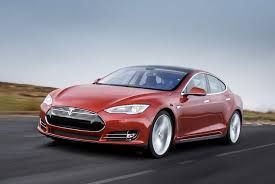
Red Tesla sedan driving on a road.
September 26, 2025
According to online reports, Tesla ignored a $60 million dollar settlement overture in the wrongful death case that ultimately resulted in a $242 million dollar jury verdict against the car maker. The lawsuit grew out of 2019 crash where a Tesla Model S with Autopilot engaged, plowed through a Florida intersection and crashed into a Chevy Tahoe. Neima Benavides Leon and her boyfriend, Dillon Angulo were standing near the Tahoe when the Tesla crashed into it. Leon was killed and Angulo suffered serious injuries. A lawsuit was filed against Tesla, asserting that although the Autopilot feature was engaged, the vehicle did not brake. Florida law permits a monetary demand to be issued before trial. If the defendant fails to accept the demand within 30 days it is considered rejected. If the plaintiff then goes to trial and secures a verdict 25% greater than the offer, the defendant is on the hook for plaintiff’s investigative expenses and attorneys’ fees. Tesla is appealing the jury verdict, citing “substantial errors of law and irregularities at trial.”.
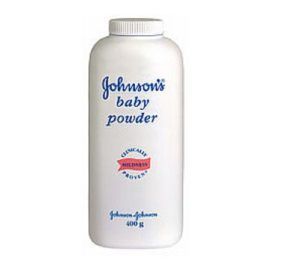
Johnson's baby powder container, white bottle, blue text, red seal, 400g.
September 26, 2025
This important ruling got kind of lost in the news cycle. A couple weeks ago, the United States Supreme Court refused to vacate a $2.2 billion dollar ovarian cancer verdict against Johnson & Johnson[“J & J”]. The verdict was originally returned by a Missouri jury in 2018 on behalf of 22 women. The original verdict was actually $4.7 billion but a Missouri Appellate Court reduced the award to $2 billion. Each of the women claimed that there was asbestos and asbestos-laced talc in J & J talcum powder products they used, and they developed ovarian cancer as a result. Asbestos is known to cause cancer. Talc, in its raw form is often found in close proximity to naturally occurring asbestos. When J & J mined talc, that talc sometimes contained asbestos. And that asbestos sometimes found its way into J & J personal hygiene products. [In 2019, J & J recalled 33,000 bottles of J & J products after FDA testing found asbestos in test samples]. J & J, has known of the risk of asbestos contamination in talc products since the 1970’s. Some 21,000 plus ovarian cancer cases are pending against J & J throughout the United States.
Movie poster for
September 26, 2025
Reports today say that DuPont and the State of New Jersey have reached a $2 Billion dollar settlement arising out of DuPont’s release of “forever chemicals” into soil, wetlands and other areas in New Jersey – and then forgetting to clean up the mess they made. The settlement with DuPont is reportedly the largest environmental settlement ever obtained by a state. “Forever chemicals” – also known as PFAS(referring to per and polyfluoroalkyl substances) are man-made chemicals that are used in an extensive variety of products as they are both water and grease-resistant. The chemicals are linked to litany of health problems, including increased risk of certain cancers(kidney, testicular and breast) liver damage, thyroid issues and reproductive problems(such as decreased fertility, low birthweight and developmental problems). NJ.Com is reporting that one of the sites where DuPont created munitions created such significant contamination in the environment that over 300 homes required filters to prevent toxic chemicals from seeping into their homes. The settlement terms provide that DuPont will spend $875 millions cleaning up the contamination and set aside another $125 million to cover other damages that may arise. Additionally, DuPont will also set p a $1.2 billion funding source and reserve fund of $475 million to ensure that even if the company fails to make payments, or goes bankrupt, public funds will not be used. For a stark introduction into the nature of PFAS, check out Dark Waters, a compelling and criminally underrated movie based on the decades old fight waged by attorney Robert Bilott against DuPont for contaminating West Virginia rural communities.