DSW employee fired for calling police has cause of action under Illinois Whistleblower Statute. - Mark P. Loftus

September 26, 2025

I saw an interesting employment law opinion come out of the Northern District of Illinois last week. Melissa Coffey was an assistant Store Manager for the Skokie DSW Shoe Store. DSW has an interesting policy when it comes to possible shoplifiting – called the Shoplifting and No-Apprehension Policy[“the Policy”]. According to the policy under no circumstances is law enforcement, mall security or any other third party to be called in the event of a possible shoplifting incident. Seems like a rather odd policy for a high volume retail business, but that is their business.

In any event, while at work on August 29, 2009, Melissa was approached by a co-worker. The co-worker told Melissa that three or four female “shoppers” that the co-worker thought had previously stolen shoes were back in the store. Melissa eyeballed the three or four “shoppers” and noticed that they weren’t really looking at shoes but instead were keeping a close eye on employees. Additionally, Melissa saw a running car parked directly outside. Based upon her co-worker’s remarks and her personal observation, Melissa grabbed a store walkie-talkie[huh??] and announced “I think we’re going to call the police”. Melissa herself did not call. Another co-worker then called the police. Of course by the time police arrived the shoppers had disappeared. No one was arrested. That same night Melissa informed the District Manager that she had called the police. A couple of days later, Melissa was fired.

Melissa sued DSW alleging violations of the Illlinois Whistleblower Act [“IWA”] ,740 ILCS 174/15. The IWA prohibits employers from retaliating against employees for disclosing information to the police where the employee has reasonable grounds to believe that the information involves a violation of law.

DSW, for its part, tried to get the case tossed on a couple of fronts. First, DSW asserted, that the IWA only protects the person who actually called the police. The Trial Court[Judge Rebecca Pallmeyer]saw through that argument right through that. The law is quite clear that whether the plaintiff reported directly to the Police, or reported through another person doesn’t matter. Additionally, DSW argued it couldn’t be liable under the IWA because the alleged violations involved actions of third parties[the suspected shoplifters] and not any DSW personnel. Again Judge Pallmeyer did her homework and checked the legislative history behind the IWA. She correctedly concluded that the language of the IWA does not limit protection only to persons who blow the whistle on their employer.

Finally, DSW argued that since no one was arrested, no crime was commited and Melissa was simply wrong to assume shoplifting. Judge Pallmeyer’s opinion however, noted that Melissa wasn’t required to prove that she a crime was committed. She only had to prove that she had reasonable grounds for suspicion. And given her co-worker’s remarks, the behavior of the shoppers and the running car, Melissa reasonably believed the law had been violated. Judgment entered for plaintiff on the IWA.

All that being said, the most burning question was never addressed – why does DSW still use walkie-talkies??


By Mark Loftus February 17, 2026
German Conglomerate makes a bid to end Roundup litigation 
By Mark Loftus February 17, 2026
By Mark Loftus February 3, 2026
THE ILLINOIS GENDER VIOLENCE ACT - IN A NUTSHELL Under the Illinois Gender Violence Act (GVA) 740 IlCS 82/1, victims of sexual assault, domestic violence and other forms of gender related violence can bring civil actions against perpetrators even when criminal charges are not filed. The GVA defines two of the four acts of “gender violence” - though the definitions are a bit convoluted: One or or more acts of violence of physical aggression satisfying the elements of battery under the laws of Illinois that are committed, at least in part, on the basis of a person’s sex; A physical intrusion or physical invasion of a sexual nature under coercive conditions satisfying the elements of battery under the laws of Illinois, whether or nor the act or acts resulted in criminal charges, prosecution or conviction. Under the Illinois Criminal Code, a person commits a battery when he or she knowingly, without legal justification, causes bodily harm or makes insulting/provoking physical contact with another individual. 720 ILCS 5/12-3. The Criminal Code requires physical contact. AND EMPLOYERS MAY NOW FACE LIABILITY In July, 2023 an amendment made it explicit that the GVA does extend to the workplace. As set forth in the Act, an employer is liable for gender-related violence in the workplace by an employee when the interaction arises out of and in the course of employment. Liability will only arise however, if the (1) the employee was directly performing his or her duties and the violence was the proximate cause of the injury or (2) while the agent of the employer was directly involved in the gender-related violence and the performance of the work was the proximate cause of the injury. Liability will only extend to the the employer however if it can be shown that (1) the employer failed to supervise, train or monitor the offending employee or 2) the employer failed to investigate and respond to reports directly provided to appropriate management personnel. Damages under the Act may include injunctive relief, and actual damages, damages for emotional distress and punitive damages. And importantly, the GVA is a fee-shifting statute - so a successful plaintiff may seek to recover attorneys fees. So, in cases of sexual harassment, may a plaintiff, include a count for damages under the GVA? The answer is an unqualified yes. And the contact need not be excessive or dramatic or prolonged - so long as there was no consent nor any justification for the physical contact. In fact, the Act notes that a legitimate threat that the harasser will commit an nonconsensual act is sufficient.
Red Tesla sedan driving on a road.
September 26, 2025
According to online reports, Tesla ignored a $60 million dollar settlement overture in the wrongful death case that ultimately resulted in a $242 million dollar jury verdict against the car maker. The lawsuit grew out of 2019 crash where a Tesla Model S with Autopilot engaged, plowed through a Florida intersection and crashed into a Chevy Tahoe. Neima Benavides Leon and her boyfriend, Dillon Angulo were standing near the Tahoe when the Tesla crashed into it. Leon was killed and Angulo suffered serious injuries. A lawsuit was filed against Tesla, asserting that although the Autopilot feature was engaged, the vehicle did not brake. Florida law permits a monetary demand to be issued before trial. If the defendant fails to accept the demand within 30 days it is considered rejected. If the plaintiff then goes to trial and secures a verdict 25% greater than the offer, the defendant is on the hook for plaintiff’s investigative expenses and attorneys’ fees. Tesla is appealing the jury verdict, citing “substantial errors of law and irregularities at trial.”.
Johnson's baby powder container, white bottle, blue text, red seal, 400g.
September 26, 2025
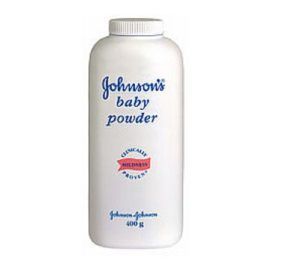
This important ruling got kind of lost in the news cycle. A couple weeks ago, the United States Supreme Court refused to vacate a $2.2 billion dollar ovarian cancer verdict against Johnson & Johnson[“J & J”]. The verdict was originally returned by a Missouri jury in 2018 on behalf of 22 women. The original verdict was actually $4.7 billion but a Missouri Appellate Court reduced the award to $2 billion. Each of the women claimed that there was asbestos and asbestos-laced talc in J & J talcum powder products they used, and they developed ovarian cancer as a result. Asbestos is known to cause cancer. Talc, in its raw form is often found in close proximity to naturally occurring asbestos. When J & J mined talc, that talc sometimes contained asbestos. And that asbestos sometimes found its way into J & J personal hygiene products. [In 2019, J & J recalled 33,000 bottles of J & J products after FDA testing found asbestos in test samples]. J & J, has known of the risk of asbestos contamination in talc products since the 1970’s. Some 21,000 plus ovarian cancer cases are pending against J & J throughout the United States.